
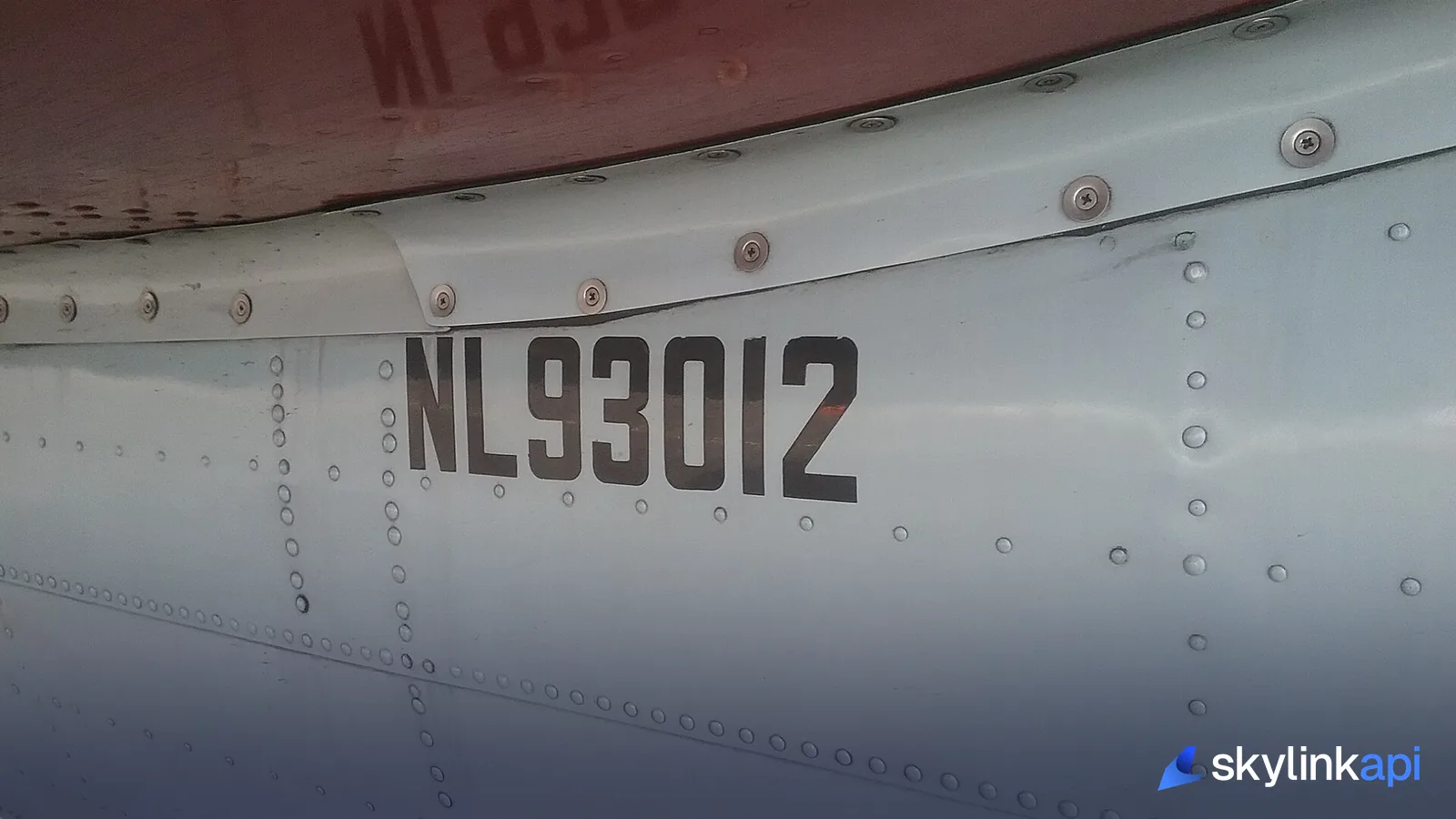
Every aircraft in the world wears a licence plate. It's painted on the rear fuselage or tail, it's unique, and — like a car's plate — the first part of it tells you where the aircraft is registered. An American jet starts with N, a British one with G-, a German one with D-, an Italian one with I-. These aren't random letters: they're nationality marks assigned under an international treaty, and once you can read them you can name the country of registry of almost any plane at a glance. Here's what the prefixes mean and how to look any tail number up.
What a registration actually is
An aircraft registration — the tail number — is the civil identity of an individual airframe, assigned by the aviation authority of the country it's registered in. It has two parts: a nationality mark (the country prefix) followed by a registration mark (the unique bit for that specific aircraft). The whole system comes from the Chicago Convention, the 1944 treaty that also created ICAO, which hands each country a block of prefixes to issue. That's why the prefix is a reliable badge of registry — though note it marks where the aircraft is registered, not necessarily the airline's home country or where it was built.
The prefix decodes the country
Here are the prefixes you'll see most often, and the country each one signals:
| Prefix | Country | Example |
|---|---|---|
| N | United States | N12345 |
| G- | United Kingdom | G-STBC |
| D- | Germany | D-AIMA |
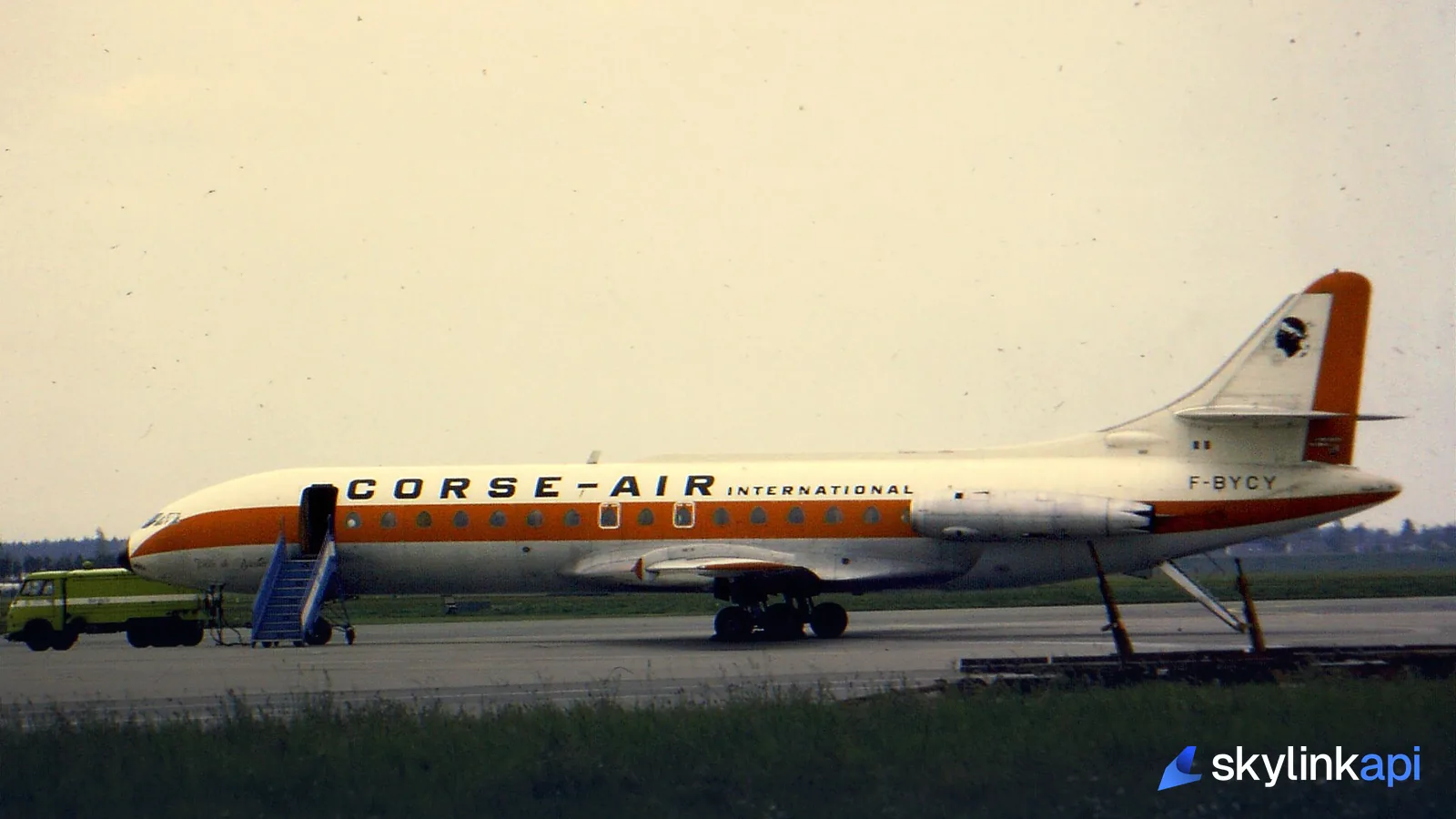
| F- | France | F-GKXA |
| I- | Italy | I-BIKE |
| C- | Canada | C-FGDT |
| VH- | Australia | VH-OQA |
| JA | Japan | JA8089 |
| B- | China / Taiwan / Hong Kong | B-2001 |
| PH- | Netherlands | PH-BVA |
| EC- | Spain | EC-MXA |
| VT- | India | VT-EXA |
The United States alone accounts for the enormous share of aircraft wearing an N — which is why "N-number" is aviation shorthand for a US registration.
Why they look so different
The formats vary because each authority picks its own scheme within its assigned block. The US uses N followed by up to five characters and no dash. Most of the rest of the world uses a single letter or letter-pair, a dash, then letters (G-STBC, D-AIMA). A few, like Japan (JA) and China (B-), lean on digits. The dash itself is a formatting convention, not part of the identity — but the prefix in front of it always maps back to one country.
Reading and looking up a tail number
Spotting the country from the prefix is the easy part; getting the aircraft behind the number — its type, operator, and history — is where an API comes in. Every registration maps to a specific airframe in a national registry, and SkyLink API's aircraft lookup endpoint resolves a tail number to that record:
curl "https://skylink-api.p.rapidapi.com/aircraft/registration/G-STBC" \
  -H "X-RapidAPI-Key: $RAPIDAPI_KEY" \
  -H "X-RapidAPI-Host: skylink-api.p.rapidapi.com"
The response returns the aircraft type, manufacturer, and operator for that registration — turning a painted-on code into a full identity. If you're working from a live ADS-B feed instead, the same registrations pair with the aircraft's Mode S hex code, and our tail number lookup guide walks through enriching a registration into a full flight card.
SkyLink API gives you a free tier of 1,000 requests/month against a registry of 615,000+ aircraft, with paid plans starting at $19/mo for production. It's available through the free trial — sign up, grab a key, and turn any tail number into an aircraft.