
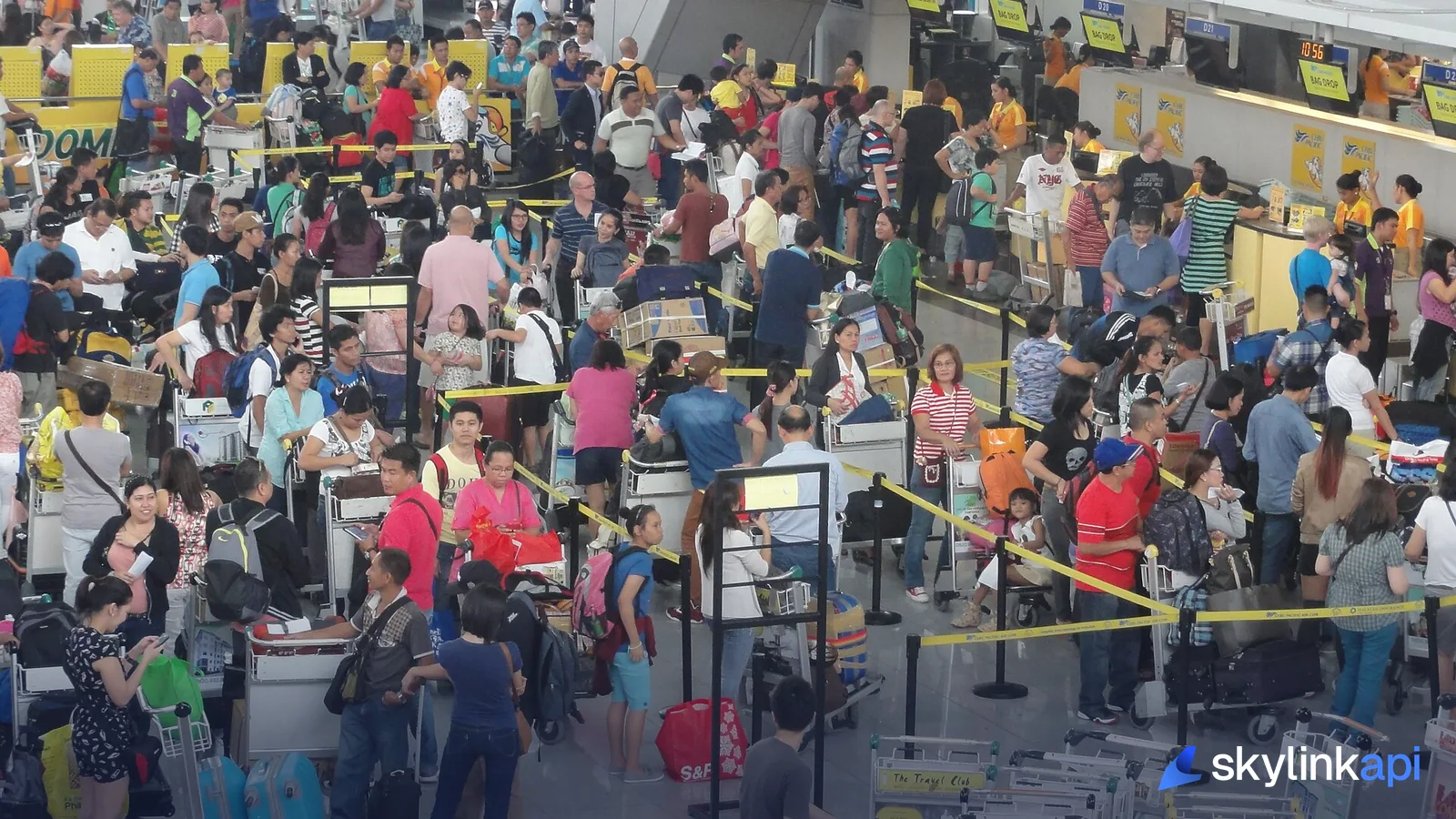
Every major airline meltdown follows the same arc. Flights start cancelling, the rebooking queue grows faster than agents can work it, and within a few hours the backlog is so deep that passengers are being rebooked onto flights two days out while empty seats depart on partner carriers nobody checked. The post-mortems always say the same thing: the systems that detect disruption and the systems that rebook passengers weren't talking to each other fast enough.
This isn't a staffing problem, though staffing makes it worse. It's a data-latency problem. The cancellation is visible in the departure-control system, but the rebooking engine is still working from a schedule snapshot that's an hour stale, and the ops team is manually triaging which flights are actually saveable versus which ones are gone. By the time the rebooking options update, those options have changed again.
This post is about the data layer underneath disruption management — what you need to detect that a flight is in trouble before it formally cancels, what you need to evaluate alternatives, and how the integration works for teams building IRROPS tooling on top of a flight data API.
What IRROPS automation actually needs
An automated disruption-management system does three things:
Detects that a flight is disrupted or likely to be disrupted. This is the part most systems do worst, because they wait for an official status change — "cancelled" — instead of watching for the signals that precede it. A flight whose inbound aircraft is two hours late has a high probability of cancelling, and that's knowable from position data long before anyone updates the status in the reservation system.
Evaluates alternatives. Given a disrupted passenger, what are the rebooking options? That requires knowing which flights to the same destination (or nearby alternates) have available seats, when they depart, and whether the passenger can physically make the connection. This is a schedule problem crossed with an availability problem.
Executes the rebooking. This part lives in the airline's PSS or the OTA's booking engine, and it's outside the scope of what a flight data API provides. But the quality of the execution depends entirely on the quality of the detection and evaluation layers feeding it.
Detecting disruption before the status flips
The official flight status — on time, delayed, cancelled — is a lagging indicator. By the time the airline publishes "cancelled," the ops team has already known for 30 minutes, and the passengers who were paying attention rebooked themselves online while everyone else is now in a queue.
Here's what leads the status:
Inbound delay. Most disruptions are caused by late-arriving aircraft, not weather at the departure airport. If the aircraft that's supposed to operate your 14:00 departure is currently 400 miles away at FL350, it's not going to be at the gate by 13:30. You can detect this by matching the flight's scheduled aircraft (by tail number or callsign of the inbound leg) to its live position.
import requests

BASE = "https://skylink-api.p.rapidapi.com"
H = {"X-RapidAPI-Key": KEY, "X-RapidAPI-Host": "skylink-api.p.rapidapi.com"}

# Check status of a flight that might be in trouble
r = requests.get(f"{BASE}/flight_status/UA1234", headers=H)
status = r.json()
dep_delay = status.get("departure_delay_minutes", 0)
arr_delay = status.get("arrival_delay_minutes", 0)
current_status = status.get("status", "unknown")
print(f"UA1234: status={current_status}, dep_delay={dep_delay}m, "
      f"arr_delay={arr_delay}m")
Airport-wide ground stops. When the FAA issues a ground delay program or ground stop at a destination, every flight headed there is affected. This is published data, available within minutes, but many rebooking systems don't ingest it — they wait for each individual flight to be updated.
# Check for FAA delay programs
delays = requests.get(f"{BASE}/delays/faa", headers=H)
for d in delays.json().get("data", []):
    print(f"{d.get('airport')}: {d.get('reason')} — "
          f"avg {d.get('average_delay')}")
Predictive signals. A flight that's currently airborne and running 40 minutes behind its schedule is probably going to arrive late, and its next leg is probably going to depart late. The flight time prediction endpoint gives you a predicted arrival that improves as the flight gets closer, which lets you estimate the knock-on delay before the airline even assigns one.
Evaluating alternatives
Once you know a flight is disrupted, the next question is: what else can the passenger take? This is where schedule data comes in.
# Find alternative flights from the disrupted origin to the same dest
r = requests.get(f"{BASE}/schedules/departures", headers=H,
                 params={"icao": "KJFK"})
departures = r.json().get("data", [])

# Filter for flights to the same destination, departing in the next 8 hours
destination = "KLAX"
alternatives = [
    f for f in departures
    if f.get("arrival_icao") == destination
    and f.get("status") != "cancelled"
]
for alt in alternatives[:5]:
    print(f"{alt.get('callsign')} dep={alt.get('scheduled_departure')} "
          f"status={alt.get('status')}")
The schedule gives you what's theoretically available. To evaluate whether each alternative is actually viable, you need to cross-check a few things:
Is the alternative itself on time? There's no point rebooking onto a flight that's about to be cancelled too. Pull the status of each candidate flight and filter out anything with a large delay or a ground-stop at its origin.
Can the passenger make it? If the disrupted flight is at gate B12 and the alternative departs from gate D40 in 25 minutes, that's a connection a healthy adult can make but a family with three kids and checked bags cannot. Minimum connection times are airport-specific and well-known, but disruption rebooking systems often ignore them in favour of just finding any seat.
Is there a partner option? For airlines, rebooking onto a codeshare or interline partner is often the fastest path, but it requires knowing the partner's schedule. OTAs have an advantage here because they already see across carriers, but they don't always have real-time status for every carrier's flights. An API that covers multiple airlines' positions and statuses in one feed simplifies this.
The cascading problem
The thing that makes disruption management genuinely hard — and the reason the Southwest 2022 meltdown happened at the scale it did — is that disruptions cascade. A cancelled flight doesn't just affect the passengers on that flight. It affects:
- The aircraft: it was supposed to operate three more legs today. All of those are now at risk.
- The crew: they're now out of position. Crew legality rules may mean they can't operate the reassigned flight even if you find them an aircraft.
- The connecting passengers: some of them were connecting from this flight to others. Their downstream flights are now oversold by zero passengers (everyone missed the connection), but the airline doesn't know that yet because the rebooking system hasn't caught up.
A real disruption engine doesn't just rebook the passengers on the cancelled flight. It propagates the disruption forward, identifies which downstream flights are affected, and starts working on those rebookings before the passengers even know they have a problem. That requires a data feed that's fast enough to model the cascade in real time — which means you're polling flight status and positions for the entire affected network, not just the one cancelled flight.
# Monitor an airline's full operation at a hub
r = requests.get(f"{BASE}/adsb/aircraft", headers=H,
                 params={"bbox": "40.4,-74.3,40.9,-73.7"})  # NYC area
aircraft = r.json().get("aircraft", [])

# How many aircraft are airborne vs on ground?
airborne = [a for a in aircraft if not a.get("is_on_ground")]
on_ground = [a for a in aircraft if a.get("is_on_ground")]
print(f"NYC area: {len(airborne)} airborne, {len(on_ground)} on ground")
What OTAs do differently
Airlines have the advantage of knowing their own crew positions and aircraft assignments. OTAs have a different advantage: they see across carriers, and their rebooking doesn't need crew or aircraft — it just needs an available fare.
The OTA disruption-management pattern is simpler in some ways:
- Monitor the status of every booked flight. When one shows a significant delay or cancellation, flag the booking.
- Search alternatives across all carriers. The OTA's inventory system already does this for regular searches; disruption search is the same query with different constraints (same day, same O&D, available inventory class).
- Offer the passenger a rebooking before they call. This is the competitive advantage — the OTA that proactively rebooks (or offers options) beats the one that waits for the passenger to notice and call in.
The data requirement is the same: you need status updates faster than the airline's own passenger-facing systems provide them, because by the time the airline posts the delay on their app, the OTA's window to offer a proactive rebooking has closed.
The cost of doing this slowly
The numbers on disruption costs are well-documented and large. A single cancelled domestic flight costs the operating airline $10,000–$40,000 in passenger compensation, rebooking, and hotel costs, depending on the jurisdiction and the time of day. A network meltdown involving hundreds of cancellations costs tens of millions.
But the less-quoted number is the cost of slow disruption management specifically. A passenger who's rebooked within 15 minutes of a cancellation usually gets a same-day option. One who waits two hours is competing with everyone else who waited two hours, and the same-day options are gone. The marginal cost of the delay-in-rebooking — not the disruption itself, but the lag in responding to it — is substantial, and it's the part that better data directly fixes.
For OTAs, the cost is customer retention. A traveller whose OTA called them with an alternative flight before the airline's app even showed the delay is a customer for life. One who found out about the cancellation from Twitter and then had to navigate a phone tree is not.
Building this
The endpoints that matter for disruption management are flight status (per-flight delay and cancellation status), FAA delays (system-wide ground stops and delay programs), flight time predictions (ML-based arrival estimates for airborne flights), and schedule lookups (to find alternatives). All four are available on the free trial — enough to prototype a disruption-detection pipeline for a handful of routes and validate the detection lead-time against actual cancellations.
For production systems processing thousands of flights, talk to us about Enterprise — disruption management is exactly the use case where the 99.9% SLA matters, because the feed going down during a weather event is the worst possible time for it to go down.