
From the moment a jet pushes back to the moment it parks at the far end, a chain of different controllers hands it along, each responsible for a specific patch of ground or sky. Passengers hear the crackle of "contact departure on one-two-one point niner" and never think about it again — but that single instruction is a handoff in one of the most choreographed systems humans have ever built. Here's how air traffic control actually works, and who's talking to your pilot at every stage.
The problem ATC solves
Air traffic control exists to do one thing: keep aircraft safely separated — from each other, from terrain, and from bad weather — while moving as many of them as efficiently as possible. The sky isn't a free-for-all; it's divided into blocks of airspace, and in controlled airspace an aircraft is always someone's responsibility. The genius of the system is that no single controller handles a whole flight. Instead the aircraft is passed from one specialist to the next, each with a manageable slice, in a relay that spans from the gate to the runway hundreds or thousands of miles away.
The layers, gate to gate
A typical flight is handed through three kinds of facility on the way up, and the same three in reverse on the way down:
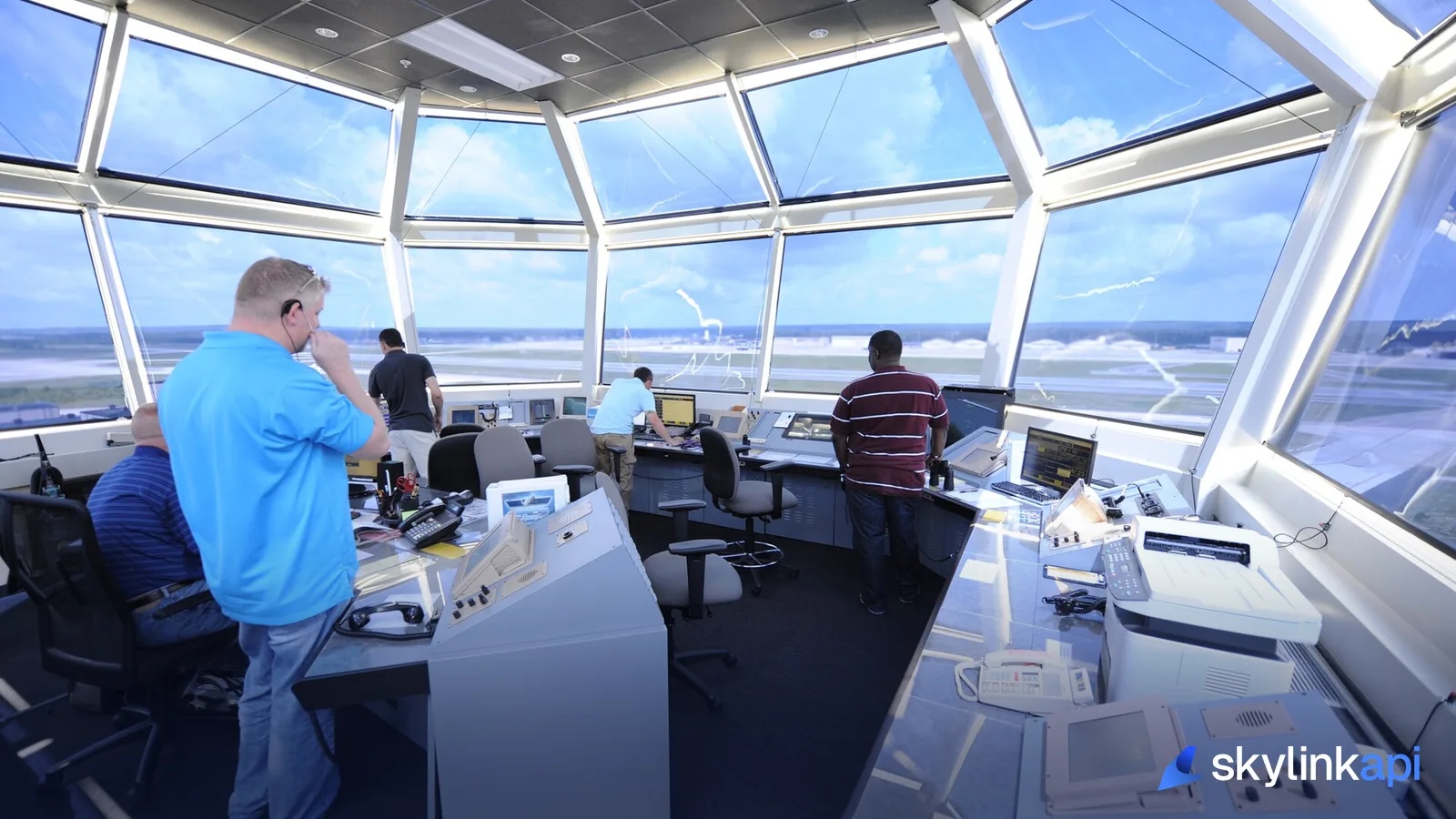
- Ground and Tower control (the airport). Ground control moves you around the taxiways; Tower clears you to take off and lands arriving traffic. Tower controllers work by looking out the window of the glass cab, backed by ground radar. Their airspace is small — the airport and its immediate surroundings.
- Approach / Departure control (TRACON). As you climb away, Tower hands you to a radar facility (in the US, a TRACON) that sequences departures and arrivals within roughly 30–50 miles of the airport. This is the busiest, most complex airspace, weaving climbing and descending traffic together — and where an arrival stack becomes a holding pattern when the airport can't take everyone at once.
- En-route Center (ARTCC). Once you're up and cruising, you're handed to an Area Control Center that owns a vast block of high-altitude airspace — a whole region — and passes you center-to-center across the country. Coming down the far end, the whole relay runs in reverse: Center → Approach → Tower → Ground.
Each handoff is that radio-frequency change you hear: "contact Boston Center on one-three-three point four-two." You've just been passed to the next controller in the chain.
How controllers see the traffic
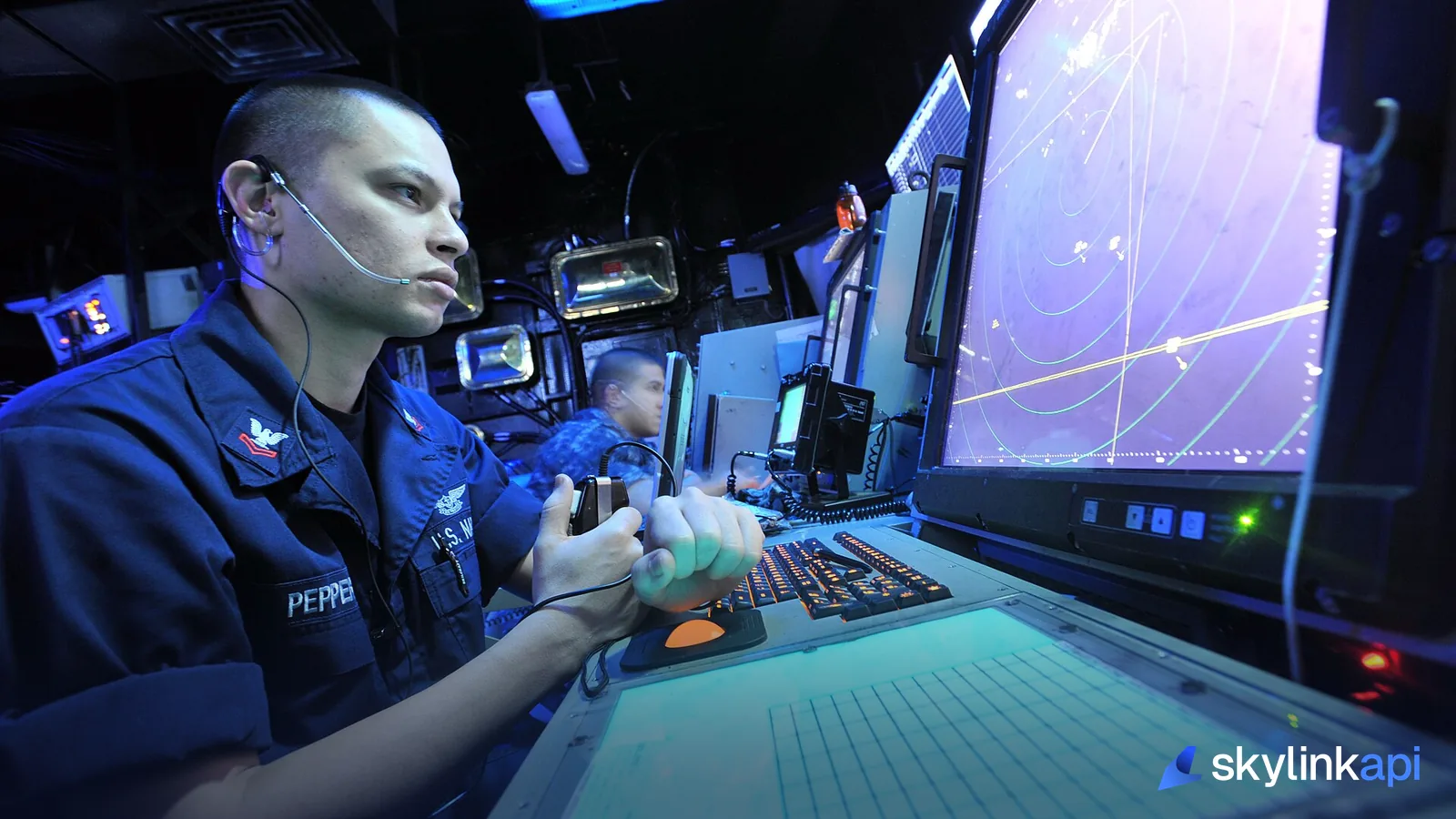
A controller's picture of the sky is built from radar and, increasingly, ADS-B — the satellite-based position each aircraft broadcasts about itself. Every target on the scope is tagged with the flight's identity, altitude, and speed. Two tools make that tagging work: the aircraft's callsign, which the controller uses to address it, and its transponder squawk code — the four-digit number ATC assigns so the right data block sticks to the right blip. Together they let one controller keep dozens of aircraft mentally sorted at a glance.
Seeing what the controller sees
The traffic picture a controller works from is, in essence, the same live position feed you can pull yourself. SkyLink API's ADS-B endpoint returns every aircraft in a slice of airspace — the raw material of a controller's scope, minus the separation responsibility:
# Every aircraft over the New York TRACON's airspace right now
curl "https://skylink-api.p.rapidapi.com/adsb/aircraft?bbox=40.3,-74.5,41.2,-73.4" \
  -H "X-RapidAPI-Key: $RAPIDAPI_KEY" \
  -H "X-RapidAPI-Host: skylink-api.p.rapidapi.com"
Each aircraft comes back with the callsign, altitude, speed, and heading a controller would see tagged to the target — the density of it over a busy terminal area is exactly why the airspace is sliced into layers and handed off the way it is.
SkyLink API gives you a free tier of 1,000 requests/month of live ADS-B, with paid plans starting at $19/mo for production. It's available through the free trial — sign up, grab a key, and build on the same traffic picture ATC works from.