
Look up on a clear day and you'll often see it: one aircraft drawing a crisp white line clear across the sky, while another, seemingly right next to it, leaves nothing at all. Those white lines are contrails — and whether a plane makes one, whether it vanishes in seconds or lingers for hours, comes down to a bit of atmospheric physics. There's also a serious twist: contrails turn out to matter for the climate far more than their wispy appearance suggests, which is why airlines and researchers are now actively trying to avoid them. Here's the full story.
What a contrail actually is
"Contrail" is short for condensation trail, and the everyday version is the cloud of vapor you breathe out on a cold morning. A jet engine burns fuel and pumps out hot, humid exhaust. When that exhaust hits the extremely cold air at cruising altitude — often −40°C or colder — the water vapor in it condenses and freezes almost instantly into a trail of tiny ice crystals. That's the white line: not smoke, not fuel, just ice. The engines provide both the moisture and the microscopic soot particles the ice needs to form around.
Why some planes leave trails and others don't
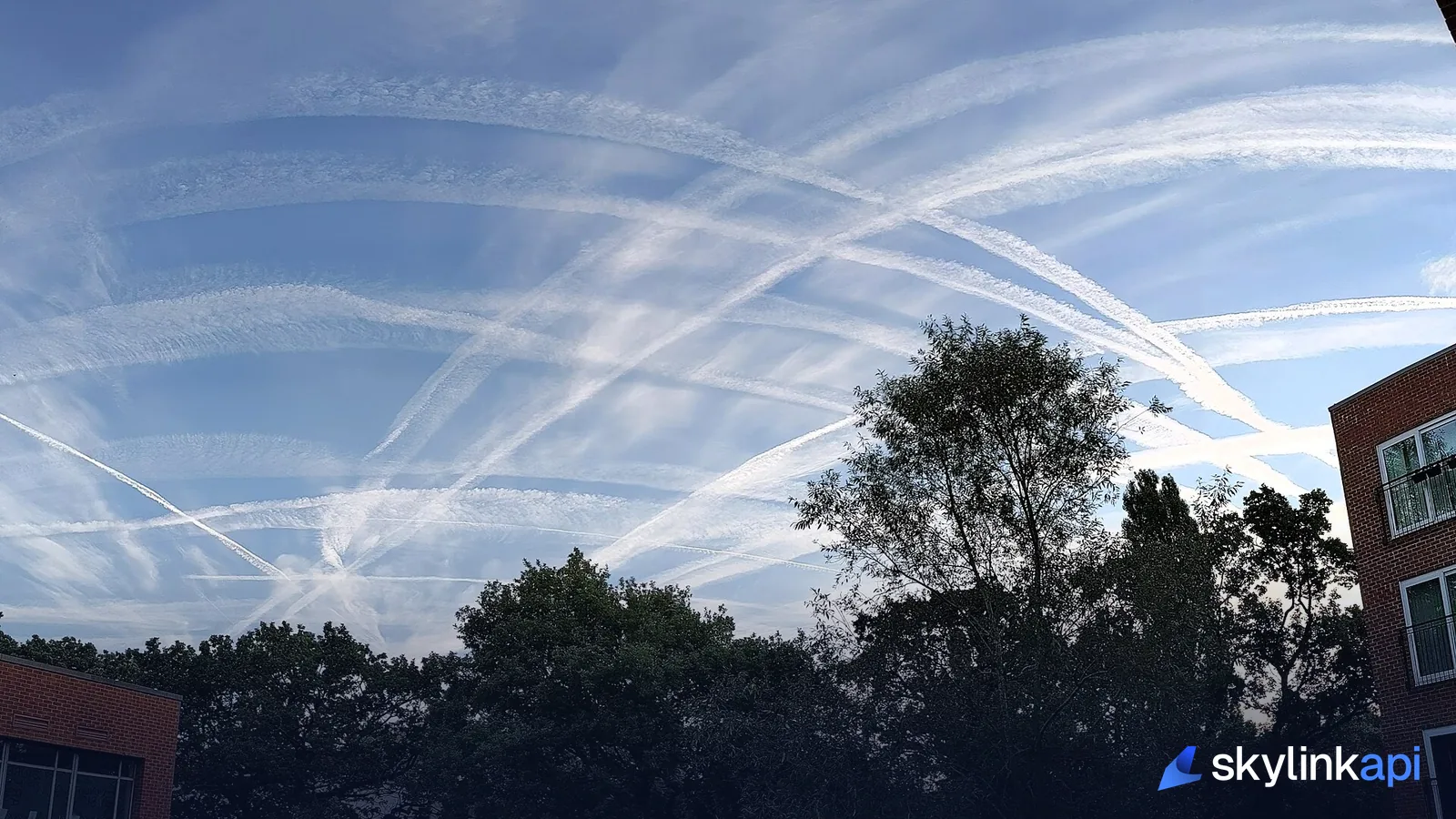
Here's the key: a contrail only forms if the surrounding air is cold enough and humid enough. That condition exists in some layers of the atmosphere and not others — so two aircraft in the same patch of sky at different altitudes can behave completely differently. The one flying through cold, moist air at, say, 36,000 feet trails a long white line; the one a few thousand feet lower, in warmer or drier air, leaves nothing at all. It's not the aircraft type or the airline — it's the specific slice of air each one happens to be flying through, which ties directly to how airlines choose cruising altitude.
Short-lived vs persistent contrails
Not all contrails are equal, and the difference is the whole climate story. When the air is cold but relatively dry, the ice crystals sublimate straight back to vapor and the trail disappears within seconds to a minute — a short-lived contrail. But when the air is ice-supersaturated — already brimming with moisture — the crystals don't evaporate. Instead they persist and spread, fanning out over hours into thin, artificial sheets of cloud called contrail cirrus that can eventually cover large areas of sky. A short-lived contrail is a curiosity; a persistent one is effectively a man-made cloud.
Why contrails are a climate problem
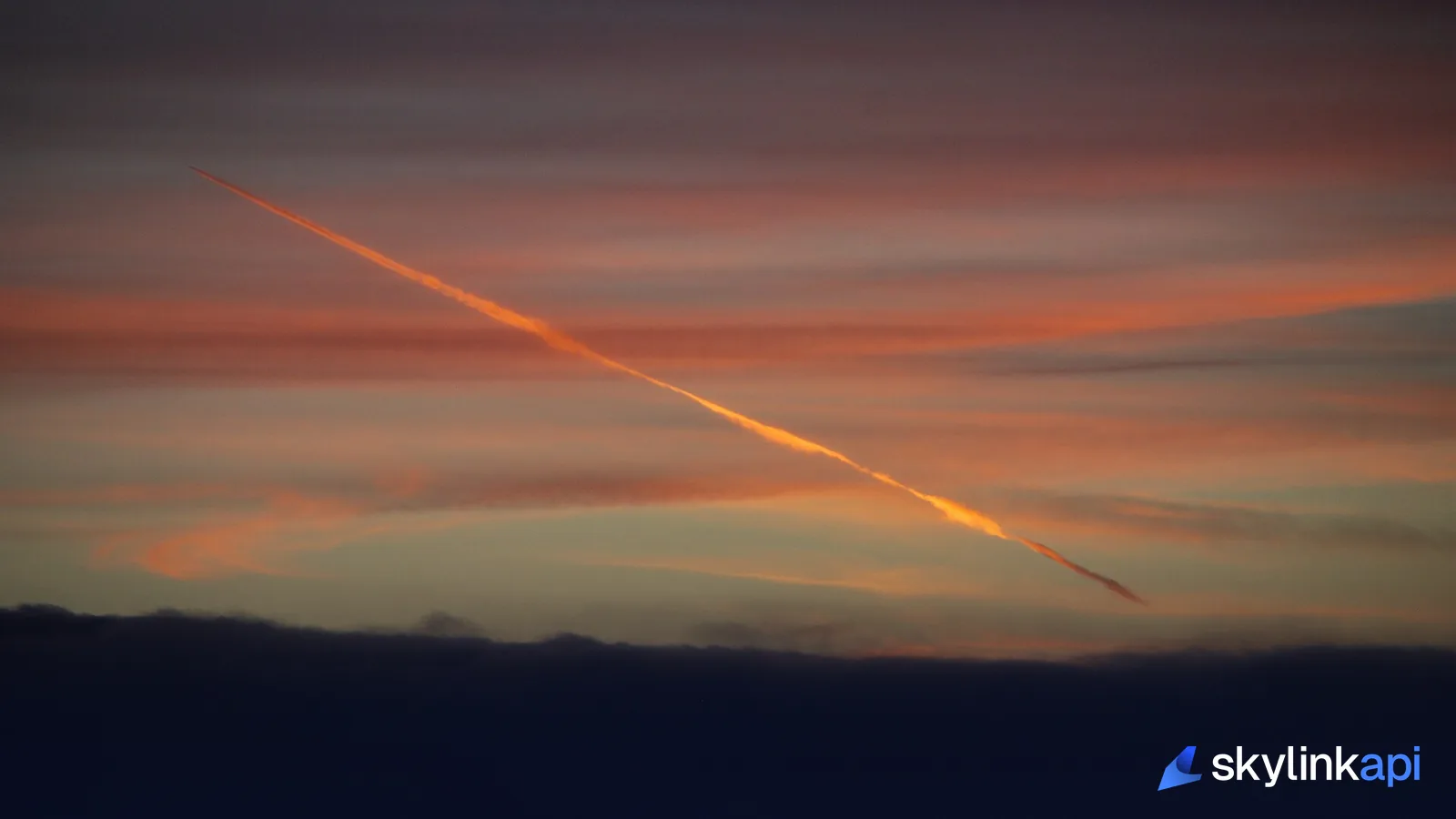
Those persistent contrail-cirrus clouds trap heat. Like any high cloud, they let sunlight through but block infrared radiation escaping from the Earth below — a net warming effect, strongest at night. The striking part is the scale: current research suggests aviation's non-CO₂ effects, contrails chief among them, may warm the planet by an amount comparable to all the CO₂ its engines have ever emitted. And unlike CO₂, the effect is short-lived and highly concentrated — a small fraction of flights, passing through those ice-supersaturated regions, create the large majority of warming contrails.
That concentration is also the opportunity. Because only some flights in some places make persistent contrails, nudging just those flights up or down a few thousand feet to avoid the moist layer can prevent the contrail entirely — for a tiny fuel penalty. High-profile trials by Google Research and Breakthrough Energy with airline partners have shown pilots can measurably cut persistent contrails using weather and flight data plus AI forecasts. It's one of the cheapest climate levers aviation has.
Putting a number on it
If you're accounting for a flight's climate impact, contrails are exactly why CO₂ alone understates it. SkyLink API's carbon estimate endpoint can include a radiative forcing index (RFI) — an IPCC factor of 1.9× — that scales the raw CO₂ up to a CO₂-equivalent figure capturing contrail and ozone warming:
curl "https://skylink-api.p.rapidapi.com/carbon/estimate?departure_icao=EGLL&arrival_icao=KJFK&include_rfi=true" \
  -H "X-RapidAPI-Key: $RAPIDAPI_KEY" \
  -H "X-RapidAPI-Host: skylink-api.p.rapidapi.com"
The co2_equivalent_kg fields come back inflated over the plain CO₂ number precisely because of effects like contrails — the same physics as the white line in the sky, expressed as a climate cost. We walk through the full calculation in how to calculate a flight's carbon emissions.
SkyLink API gives you a free tier of 1,000 requests/month of carbon, route, and ADS-B data, with paid plans starting at $19/mo for production. It's available through the free trial — sign up, grab a key, and put real climate numbers behind the trails in the sky.