
Every so often a video goes viral: a passenger films out the window as a brilliant flash engulfs the wing, the cabin lights flicker, and everyone gasps. It looks like a catastrophe. It almost never is. Commercial aircraft are struck by lightning far more often than most people realize, and they're engineered so thoroughly to handle it that the usual outcome is a small scorch mark found during the next inspection. Here's what actually happens when lightning hits a plane — and why you're safe inside.
How often it happens
Lightning strikes on airliners are routine, not rare. Industry estimates put it at roughly one strike per aircraft per year on average. In many cases the aircraft isn't an innocent bystander at all — flying through a heavily charged cloud, the metal airframe distorts the local electric field enough to trigger the strike itself, becoming a momentary link in a discharge that then exits somewhere else. So the strike is often less "bolt from the sky hits plane" and more "plane completes a circuit already building in the cloud."

What actually happens to the aircraft
The magic word is Faraday cage. An aircraft's aluminium skin (or, on modern jets, a conductive mesh embedded in the carbon-fibre composite) forms a continuous conductive shell. When lightning strikes, the enormous current flows around the outside of that shell and off the other end — typically entering at one extremity, like the nose or a wingtip, and exiting at another, like the tail. The current stays on the exterior; the interior, where you're sitting, stays at essentially the same potential throughout. That's why passengers feel, at most, a flash and a bang — the current never comes inside.
Why the plane is protected
None of this is luck — it's designed in, and certified before an aircraft ever flies:
- Bonding and grounding. Every metal panel and component is electrically bonded so current has a continuous, low-resistance path around the airframe with no gaps to jump.
- Static wicks. Those little rods trailing off the wings and tail bleed off static charge continuously, reducing build-up.
- Diverter strips and shielding. Non-conductive parts like the radome (the nose cone over the radar) get lightning diverter strips, and wiring and avionics are shielded so the current pulse can't fry the electronics.
- Fuel-system protection. The fuel tanks and vents get special attention so a strike can't ignite fuel vapor — the single most safety-critical requirement of all.
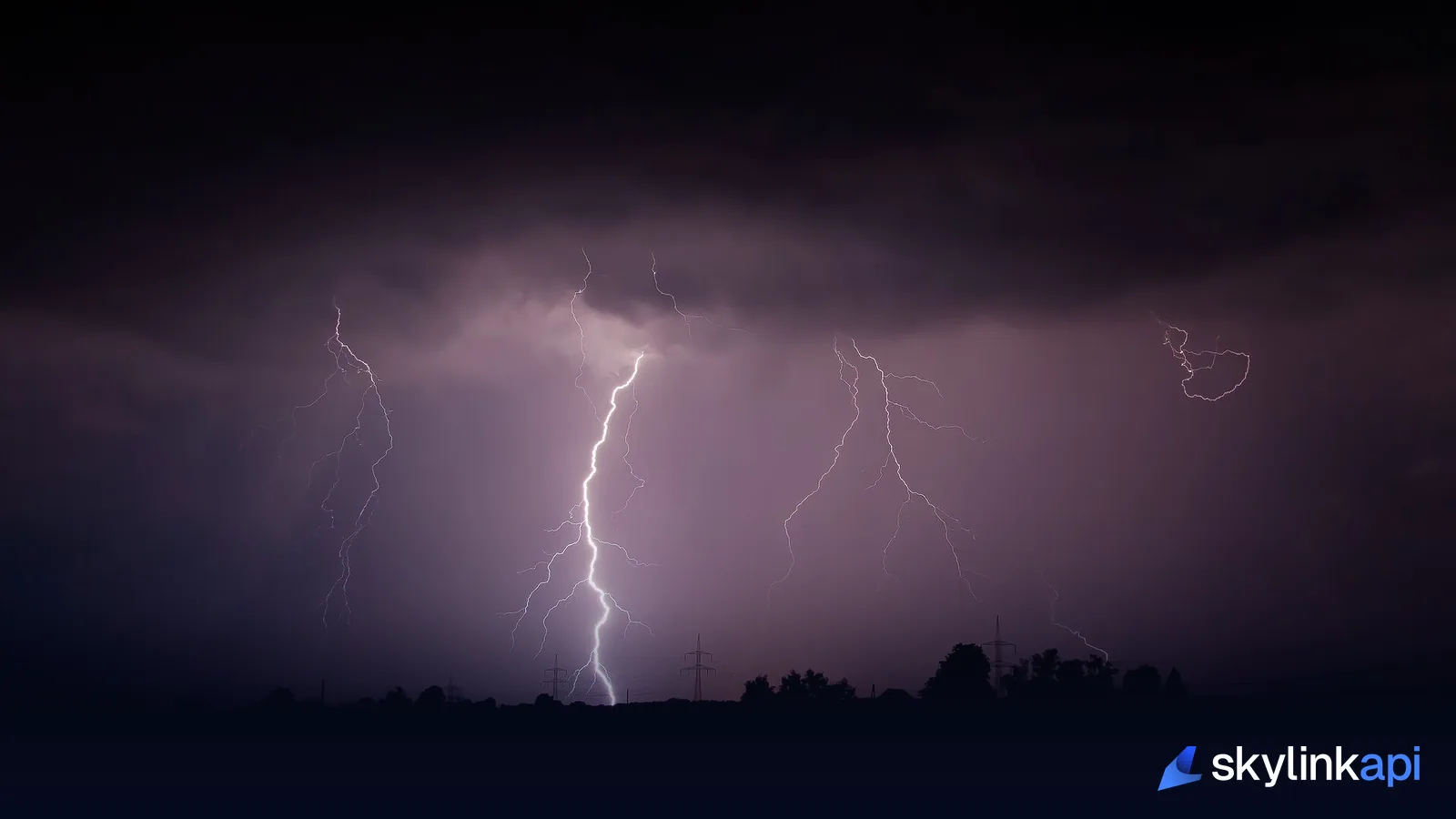
Does it damage the plane, or cause a diversion?
Usually the damage is cosmetic: small burn or pit marks at the entry and exit points, occasionally a tiny hole in a non-structural panel. After landing, engineers inspect the aircraft along the likely current path and sign it off — often finding nothing worse than a scorched rivet. A strike can occasionally knock out a system or require more involved repair, and a crew may elect to land as a precaution, but an outright emergency from a lightning strike is very much the exception. The last airliner loss directly attributed to lightning in a major aviation system was decades ago, before modern fuel-tank protections became standard.
Avoiding the storm in the first place
The best defense is not getting hit, and crews route around the thunderstorms that produce lightning using the same weather tools behind every hazard decision — onboard radar plus the forecasts and reports we cover in SIGMETs, AIRMETs, and PIREPs and the ride picture from turbulence forecasting. Thunderstorm activity shows up in the decoded weather, too. A quick METAR check flags thunderstorms (TS) right at an airport:
curl "https://skylink-api.p.rapidapi.com/weather/metar/KMIA" \
  -H "X-RapidAPI-Key: $RAPIDAPI_KEY" \
  -H "X-RapidAPI-Host: skylink-api.p.rapidapi.com"
A TS in the weather codes, or a convective AIRMET/SIGMET along the route, is the cue crews and dispatchers use to give the charged clouds a wide berth. For decoding those weather strings in full, METAR and TAF explained is the companion read.
SkyLink API gives you a free tier of 1,000 requests/month across decoded weather, SIGMETs, and PIREPs, with paid plans starting at $19/mo for production. It's available through the free trial — sign up, grab a key, and build the storm awareness that keeps flights clear of the lightning.